K.AI is multimodal, and eleven apps run on it.
Reads, hears, speaks — and AccessOPTI, Commercial and Medical Affairs apps sharing one product record in your own infrastructure.
Infrastructure - Systems - Technology - Discovery
To Geometry.
To Motion.
To the Oloid.
Rooted in Humanteconomics, our human‑first, privacy‑centric architecture puts people, not data, at the centre.
Meet K.AI →New
From access to discovery. The same intelligence, applied earlier.
K.AI · Discovery
Discovery has always been a search problem dressed up as a chemistry problem.
We return it to first principles.
One continuous line
Most of the industry treats discovery and access as two conversations, held years apart. A molecule that cannot be reimbursed was never viable — only unfinished.
Target identification · Candidate prioritisation · Mechanism reasoning
Trial design intelligence · Evidence gap mapping · Comparator strategy
AccessOPTI — Landscape · CEA · BIA · Pricing & Tender · Access Loop
Our philosophy
Shaping a Better World for Future Generations.
This is not just a concept—it is a generational commitment to building a better world for those who come after us.
Explore Humanteconomics →Seven shifts define the ground we build on — from systems-first to human-first, volatile geo-economic realities, value-based healthcare, healthcare disparities, the tech catalyst of AI, ML and quantum, a future built for our children's children, and now medicine before the molecule.
Each is set out in full on the Humanteconomics page.
Our intent
We begin with a question older than technology itself: what does it mean to build intelligence that serves humanity — not consumes it?
Read our intent →We reject the extractive logic of centralised technologies. We refuse the belief that intelligence requires surrendering data.
We choose a different path — one rooted in HumanTeconomics, where people remain sovereign, where privacy is a foundation rather than a feature, and where technology strengthens human dignity instead of eroding it.
And through every phase, one principle remains unbroken:
Your intelligence stays within your environment. It does not drift. It does not leak. It does not become someone else's asset.
We build for the long arc of time — for societal benefit measured not in quarters, but in generations. For a future worthy of our children's children.
Our stance. Our intent. Our pursuit to unlearn and relearn.
Our impacts
Evolving toward sentiment and visual understanding — adapting to how people naturally think, communicate, and decide.
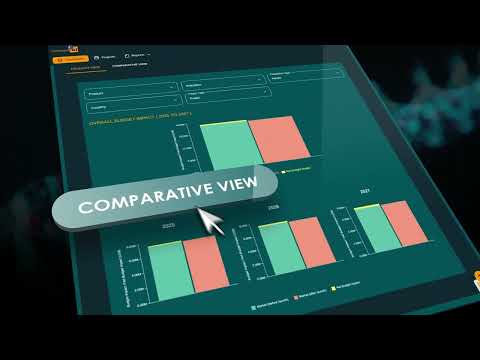
K.AI 2.0 is built for the human-first era — amplifying individual capability for better decisions, stronger resilience, and more equitable outcomes.
The suite
AccessOPTI for Market Access & HEOR, connected Commercial apps, firewalled Medical Affairs — all on one K.AI knowledge base, running in your infrastructure.
What we are working on — and beyond
One core. One memory. One intelligence — extended in three directions, in the order the evidence allows.
Reads, hears, speaks — and AccessOPTI, Commercial and Medical Affairs apps sharing one product record in your own infrastructure.
Target identification, candidate prioritisation and mechanism reasoning — judged on the whole journey a molecule has to make, not just the first step.
Classical now, quantum when it lands. Problems stated once, so the backend can change without a rewrite — and without loosening a single Oloid term.
Our unique framework
Oloid runs entirely in your infrastructure—no data sharing, no external calls. We're exploring blockchain tech to reinforce it. Discovery data is the most valuable asset a company owns. It should never be the price of using a tool.
Explore the Oloid Framework →Six principles, each derived from the geometry of the oloid itself — continuous motion, balance by design, unbroken contact, transparency at every layer, decentralised architecture, and ethics in motion. Every one is explained in detail, with the questions it answers, on the Oloid Framework page.
Why us
Most medicines that fail do not fail in the laboratory. They fail years later, when the evidence a payer needs was never designed in.
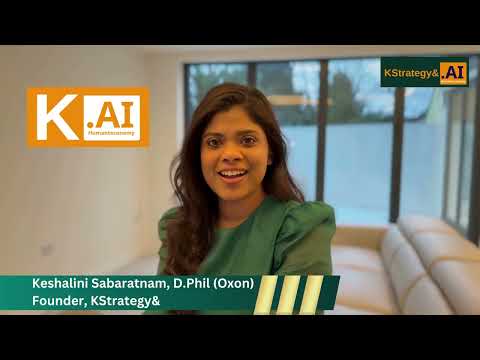
Founded by Dr Keshalini Sabaratnam — DPhil, University of Oxford; postdoctoral research at Harvard Medical School in structural biology and antiviral drug discovery. Molecules understood as geometry first.
Over a decade across academia, strategic market access and HTA consulting in pharma and healthcare, and drug-development data analytics — where a molecule's fate is decided long after the laboratory has finished with it.
Our philosophy
Shaping a Better World for Future Generations.
This is not just a concept—it is a generational commitment to building a better world for those who come after us.
Our philosophy
What is changing, and why it matters.
Humanteconomics is the ethic behind everything we build: intelligence that stays inside your environment, humans in control of every decision, and the question — who will this help? — asked before the molecule is chosen.
The Shift: From Systems-First to Human-First.
Technology built around systems asks people to adapt to it. Human-first design starts with the person making the decision.Navigating Volatile Geo-Economic Realities.
Budgets, supply chains and regulation move faster than annual plans. Strategy has to be re-run, not re-written.The Rise of Value-Based Healthcare.
Payment follows outcomes. Evidence of value has to be built into a product from the start, not assembled at launch.Closing the Gap: Tackling Healthcare Disparities.
Access is uneven within and between countries. Better decisions about price, evidence and reach are how the gap closes.The Tech Catalyst: AI, ML, Quantum & More.
The tools now exist to reason over more evidence than any team can read. The question is who controls them, and whose data they run on.A Future Built for Our Children's Children.
Societal benefit measured not in quarters but in generations.Medicine Before the Molecule.
The decision about what to discover is a decision about who will be treated. Access thinking, brought upstream.In practice
Humanteconomics is the ethic behind everything we build: the Oloid Framework that keeps intelligence inside your environment, the suite that keeps humans in control of every decision, and K.AI Discovery that asks the human question — who will this help? — before the molecule is chosen.
Our intent
We begin with a question older than technology itself:
What does it mean to build intelligence that serves humanity — not consumes it?
This is the philosophy that shapes our technology.
We reject the extractive logic of centralised technologies.
We refuse the belief that intelligence requires surrendering data.
We choose a different path — one rooted in HumanTeconomics,
where people remain sovereign,
where privacy is a foundation rather than a feature,
and where technology strengthens human dignity instead of eroding it.
And through every phase, one principle remains unbroken:
Your intelligence stays within your environment.
It does not drift.
It does not leak.
It does not become someone else's asset.
We build for the long arc of time —
for societal benefit measured not in quarters,
but in generations.
For a future worthy of our children's children.
Our stance. Our intent. Our pursuit to unlearn and relearn.
Unique to KStrategy&
A human-first, transparent, decentralised intelligence model
People have real questions
The OLOID Framework exists to answer those questions in a single, simple structure.
It is our commitment to clarity, sovereignty, and responsibility — not hidden pipelines or fine print.
Six Principles
— a shape defined by continuous motion, perfect balance, and unbroken contact.
Clear, Traceable Intelligence
Humans Stay in Control
Your Data Never Leaves Your Environment
No Small Print
No MultiTenancy, No Drift, No Exposure
HumanTeconomics Operationalised
Six Principles — in detail
Stability in Motion
Even with full isolation, transparency, and decentralisation, no system is ever completely risk-free. What matters is how clearly we see those risks and how steadily we respond. Here's what can still go wrong — even inside a stable, balanced Oloid system:
No model is perfect, and rare misinterpretations can still occur.
Settings, permissions, or workflows can be applied incorrectly.
Rules evolve, and systems must adapt to stay aligned.
Hardware failures, third-party libraries, or new security threats can emerge.
These are not hidden risks; they are known, manageable realities of any advanced system.
Evolving to Maintain Equilibrium
Like the oloid — always in motion, always in balance — we evolve continuously to keep the system stable, clear, and aligned with human intention. We do this through:
Continuous improvement of safeguards
Regular reviews of accuracy, security, and compliance
Transparent updates with no silent changes
Close collaboration with users to adapt to new needs
Stability isn't static — it's maintained.
Equilibrium isn't fixed — it's practiced.
And we commit to that practice every day.
Our impacts
Evolving toward sentiment and visual understanding — adapting to how people naturally think, communicate, and decide.
Capabilities
K.AI 2.0 is built for the human-first era — amplifying individual capability for better decisions, stronger resilience, and more equitable outcomes.
The suite
Every app runs on the same product context and hands its results to the next. Select an app to see what it draws on and what it passes forward.
Evidence — RWE, trials, epidemiology, HTA policy — lives inside K.AI and is drawn on automatically by every app.
Three lanes, one record
Landscape, CEA, BIA, Pricing & Tender and Access Loop share one product context. A change to the eligible population in BIA reaches pricing, forecasting and the payer story without re-keying.
Forecasting, Contracting and Brand & Field consume covered volume, net price and positioning from the access apps and hand realised discounts and uptake back.
Evidence Gen and KOL / MSL exchange clinical questions and approved narratives through K.AI, with the compliance boundary kept intact.
Every app reads from and writes to the same record.
Learn, Source, Build, Analyse, Strategise — set the depth K.AI works at.
Budget impact models, dossiers and summaries, versioned and traceable to their inputs.
K.AI · Discovery · New
From access to discovery. The same intelligence, applied earlier — in your infrastructure, on your data, with humans in control.
First principles
Discovery has always been a search problem dressed up as a chemistry problem. Candidates are screened, ranked and carried forward on the evidence available in the laboratory — while the questions that decide a medicine's fate, who will pay for it, against what comparator, at what price, are asked years later.
We return it to first principles. The same geometry the Oloid Framework applies to strategy applies to a molecule: shape, motion and contact. K.AI reasons over structure, mechanism and evidence as one continuous surface, so a candidate is judged on the whole journey it has to make, not just the first step.
One continuous line
Most of the industry treats discovery and access as two conversations, held years apart. A molecule that cannot be reimbursed was never viable — only unfinished.
Target identification · Candidate prioritisation · Mechanism reasoning
Trial design intelligence · Evidence gap mapping · Comparator strategy
AccessOPTI — Landscape · CEA · BIA · Pricing & Tender · Access Loop
What K.AI Discovery does
Three capabilities, each traceable back to the evidence it used.
Surface targets by mechanism and unmet need, weighed against the disease landscape and the evidence payers will eventually ask for.
Rank candidates on likelihood of clinical, regulatory and reimbursement success together — not on any one of them alone.
Explain why a candidate should work, where it may fail, and which comparators and endpoints will matter downstream.
Built on the Oloid Framework
Oloid runs entirely in your infrastructure — no data sharing, no external calls, no multi-tenancy. Discovery data is the most valuable asset a company owns. It should never be the price of using a tool.
Why us
Most medicines that fail do not fail in the laboratory. They fail years later, when the evidence a payer needs was never designed in.
Founded by Dr Keshalini Sabaratnam — DPhil, University of Oxford; postdoctoral research at Harvard Medical School in structural biology and antiviral drug discovery. Molecules understood as geometry first.
Over a decade across academia, strategic market access and HTA consulting in pharma and healthcare, and drug-development data analytics — where a molecule's fate is decided long after the laboratory has finished with it.
Let's talk about where yours is being made.
Talk to us about K.AI Discovery →Quantum
We are building for the machines that can hold them.
Classical machines search a space one region at a time. The questions that decide a medicine — which molecule, which trial, which comparator — are not shaped like that.
Where we are
Quantum computing is not ready, and we will not be the ones to tell you otherwise. What is ready is the decision to stop building as though it will never arrive — because the cost of that assumption is not paid on the day the hardware lands. It is paid in every model written between now and then.
The commonly cited size of drug-like chemical space. Classical search visits it one region at a time.
Qubits required to start. The work that matters now is how the problem is stated, not what runs it.
Architecture. The backend changes; your models, your audit trail, and the reasoning behind them do not.
What changes
Quantum readiness is mostly not a quantum problem. It is a question of whether a problem was written down in a way that outlives the machine it first ran on.
Express a chemistry or optimisation question in a form that does not assume the machine underneath it. Most of the work of quantum readiness is not quantum.
The same statement runs on the hardware you already have and targets quantum backends as they mature. Nothing is held back waiting for a machine.
When the hardware is ready, what changes is the backend. Your models, your traceability, and the conclusions already on record stay exactly as they are.
Where it lands first
Quantum will not make everything faster, and a page that says otherwise is selling something. These are the three classes where the advantage is expected to be demonstrable rather than argued — and all three are already in our work.
Electronic structure at a fidelity classical approximation cannot reach. The first place quantum advantage is expected to be demonstrable rather than debated.
Trial design, comparator selection, portfolio and supply decisions — problems where the space is wide rather than the arithmetic hard.
Probabilistic models whose distributions are expensive to draw from. The question our budget-impact and cost-effectiveness work already asks, at a scale it cannot yet reach.
The Oloid framework
The day a quantum backend is worth using, most of them will be someone else's machine, reached across someone else's network. That is an architecture problem, and we would rather solve it now than discover it later.
What does not loosen because the hardware got faster: no multi-tenancy of your models, no training on your science, and every conclusion traceable to what produced it.
The honest position
Every model we ship is useful on its own terms and depends on no machine that does not yet exist.
No credible general advantage exists yet for the workloads we care about, and we do not price, plan, or promise as though it does.
Credible estimates for useful quantum chemistry range from a few years to more than a decade. We are building so that the answer does not have to be yours to carry.
Transparency at Every Layer is one of the six principles of the Oloid framework, and it does not get suspended for the subject everyone else exaggerates.
If your roadmap already assumes it, we should talk about what it actually requires.
Get in touch →Contact
Let's talk about how the Oloid Framework can transform your organisation.
Opens your email client with the message pre-filled.
Legal
Placeholder — replace with your privacy text before publishing.
Content to follow.
Legal
Placeholder — replace with your terms text before publishing.
Content to follow.